
Boats and water
Around boats and water, life jackets and the weather forecast matter most.
- Wear a life jacket, with child sizes for children.
- Don't board overloaded or unsound boats.
- Check weather and water warnings; cancel if a storm is coming.
ঢাকা
The capital, and a city roughly four centuries old. In Old Dhaka's lanes a Mughal fort, a nawabs' palace, an Armenian church and the conch-shell makers' street still sit side by side; newer Dhaka has Louis Kahn's parliament and the memorials of 1971. Traffic is a fact of life here, so plan one area per day rather than criss-crossing the city.
Drafted from public information and not yet checked by an editor. Confirm locally before you go.
Last updated: 07/10/2026
Details change over time. Check locally before you travel.
Saved only on this device; it also shows on your map and passport.
About the seasons: November to February is the most comfortable time for walking, though winter also brings dust and smog. In the monsoon many streets flood after heavy rain, and the April–May heat makes midday walks in Old Dhaka hard going.
Hazrat Shahjalal International is the country's main airport, with domestic flights to almost every other airport in Bangladesh.
Kamalapur is the main station, and many northbound and eastbound trains also stop at the Airport station. Since the Padma Bridge opened, trains also run towards the southwest.
Gabtoli, Sayedabad and Mohakhali terminals serve almost every district. Check which terminal covers your direction before you set out.
Launches leave Sadarghat for Barishal, Bhola, Patuakhali and other river towns in the south. Some routes have thinned since the Padma Bridge opened, so check first.
The metro line from Uttara to Motijheel is the best way to skip traffic. In Old Dhaka, rickshaws and your own feet work best; app-based cars and motorbikes are easy to find elsewhere. Agree rickshaw fares before you get on.
Every budget is covered. Upmarket hotels cluster in Gulshan and Banani; mid-range and budget options are around Paltan, Motijheel and Farmgate. If Old Dhaka is your focus, staying nearer saves you the morning traffic.
This is general guidance on the kinds of stay available, not a recommendation of specific hotels. Check and book for yourself before you go.
Calculated with TravelVerseBD's cost model; real costs can be higher or lower.
Last updated: 06/10/2026
Details change over time. Check locally before you travel.
Approximate: BDT 2,750 – BDT 3,900
per person, per day (estimate)
Covers a place to stay, food, local transport and small extras. It does not include fares to get there, permits, guides, boat or jeep hire, or entry fees.
| Stay | BDT 1,800 |
|---|---|
| Food | BDT 1,000 |
| Local transport | BDT 450 |
| Small extras | BDT 300 |
| Total (per person, per day) | BDT 3,550 |
A further 10% is added as a buffer
Figures come from our open cost model (updated 6 Oct 2026), not from any shop's or hotel's prices. Real costs shift with festivals, season and bargaining.
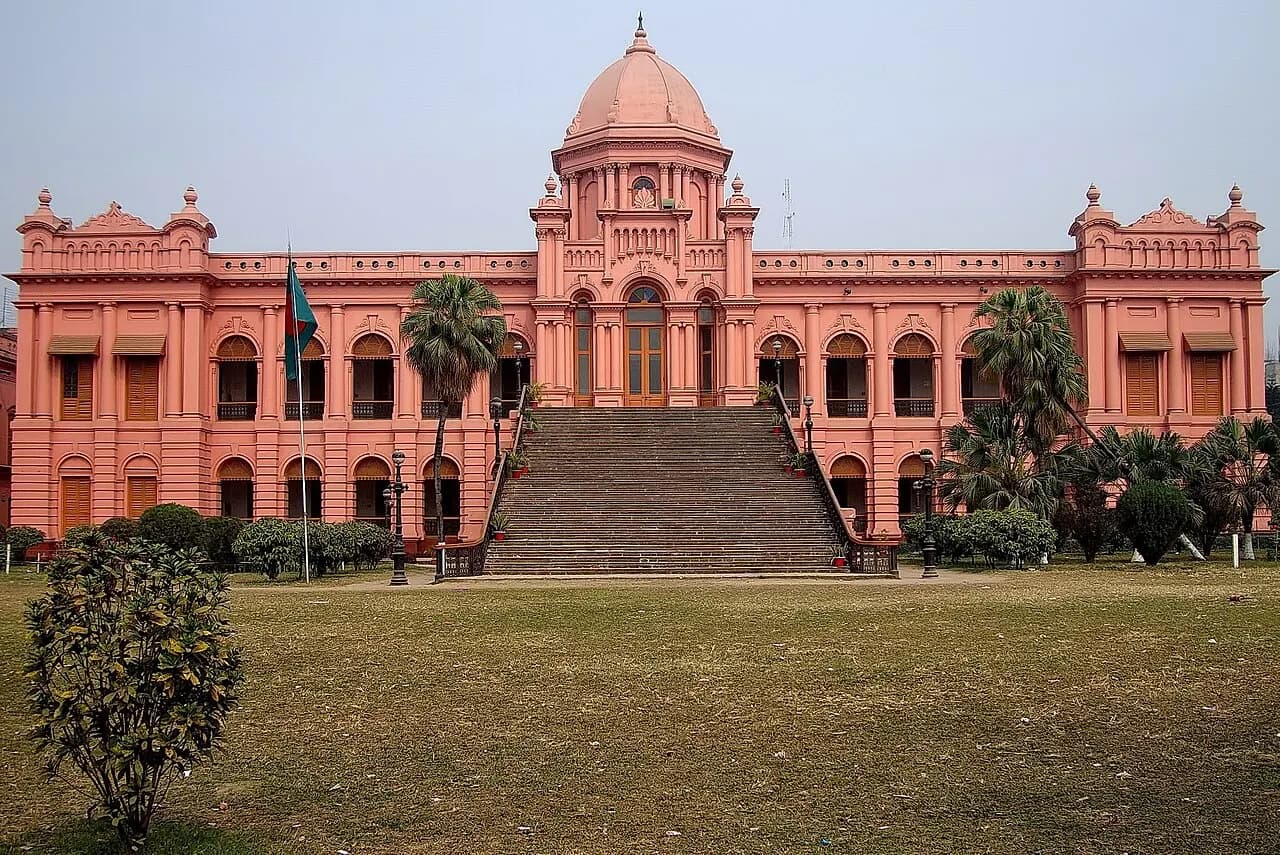
The pink riverside palace of the Nawabs of Dhaka on the Buriganga, now a museum. Its rooms of furniture and portraits give a feel for 19th-century Dhaka.
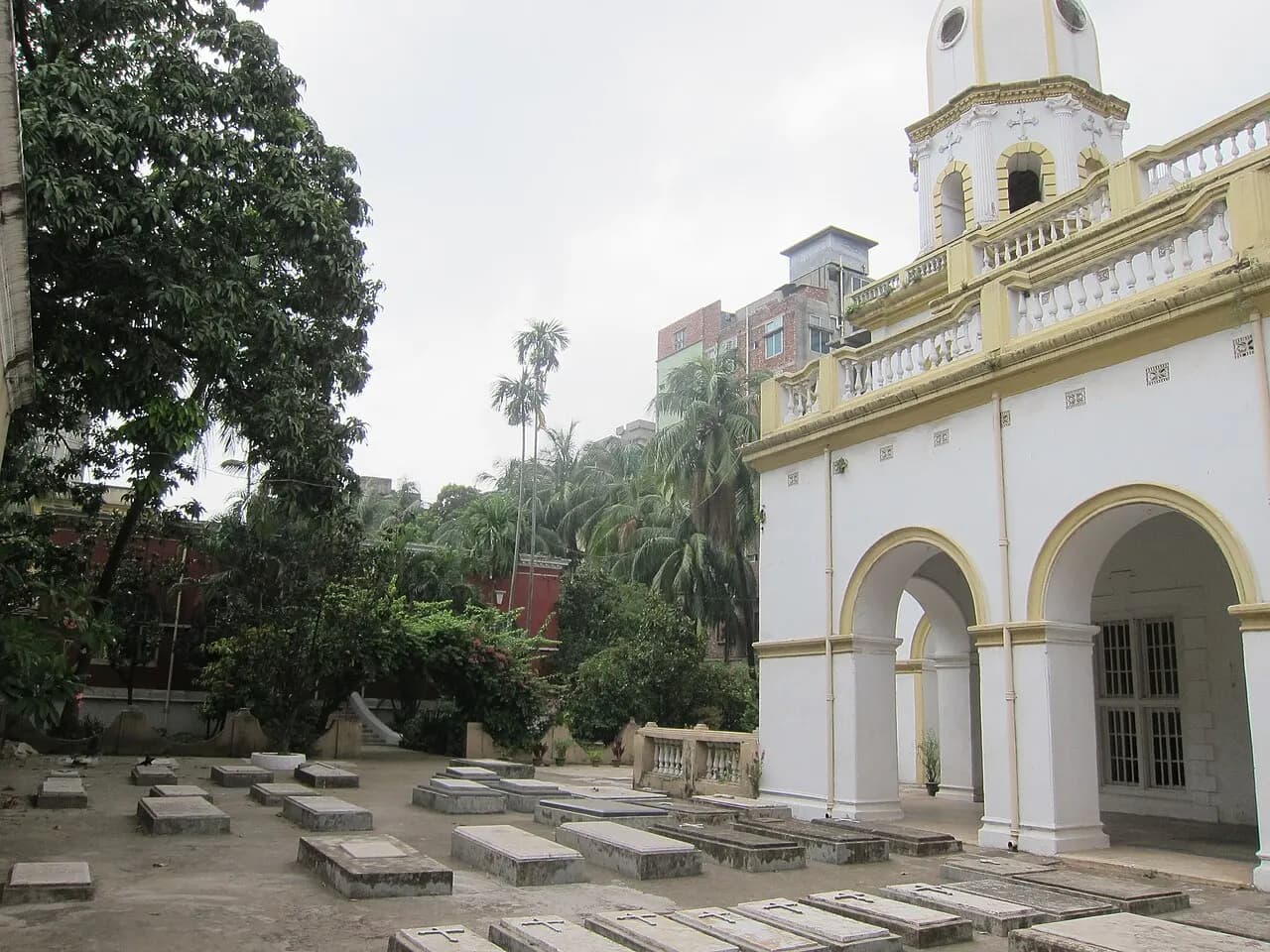
A quiet 18th-century church in Armanitola, ringed by the graves of Armenian merchants — a breather in the middle of Old Dhaka's bustle.
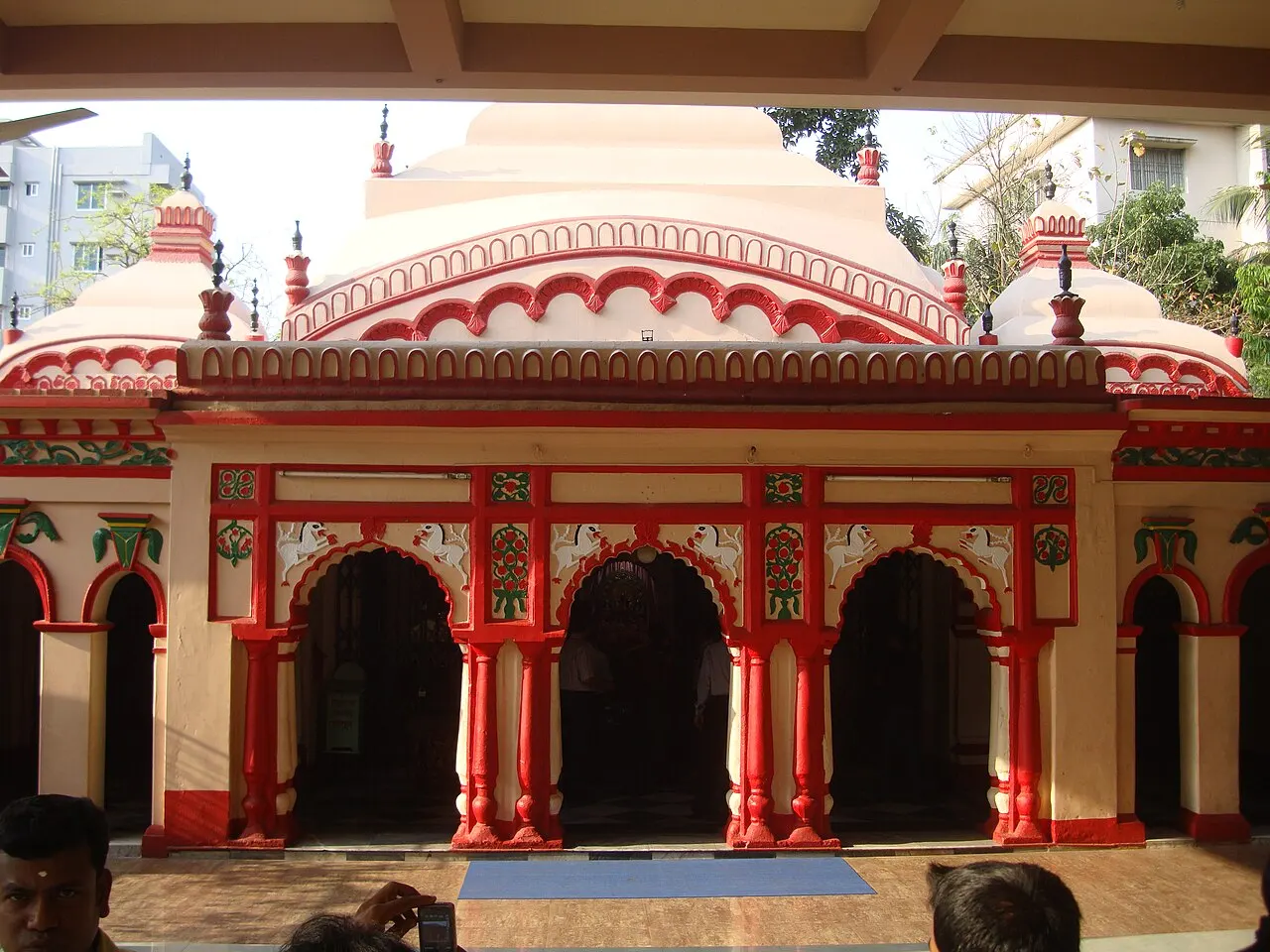
Known as the national temple, this is a very old seat of goddess worship. It is busiest and most festive during Durga Puja.
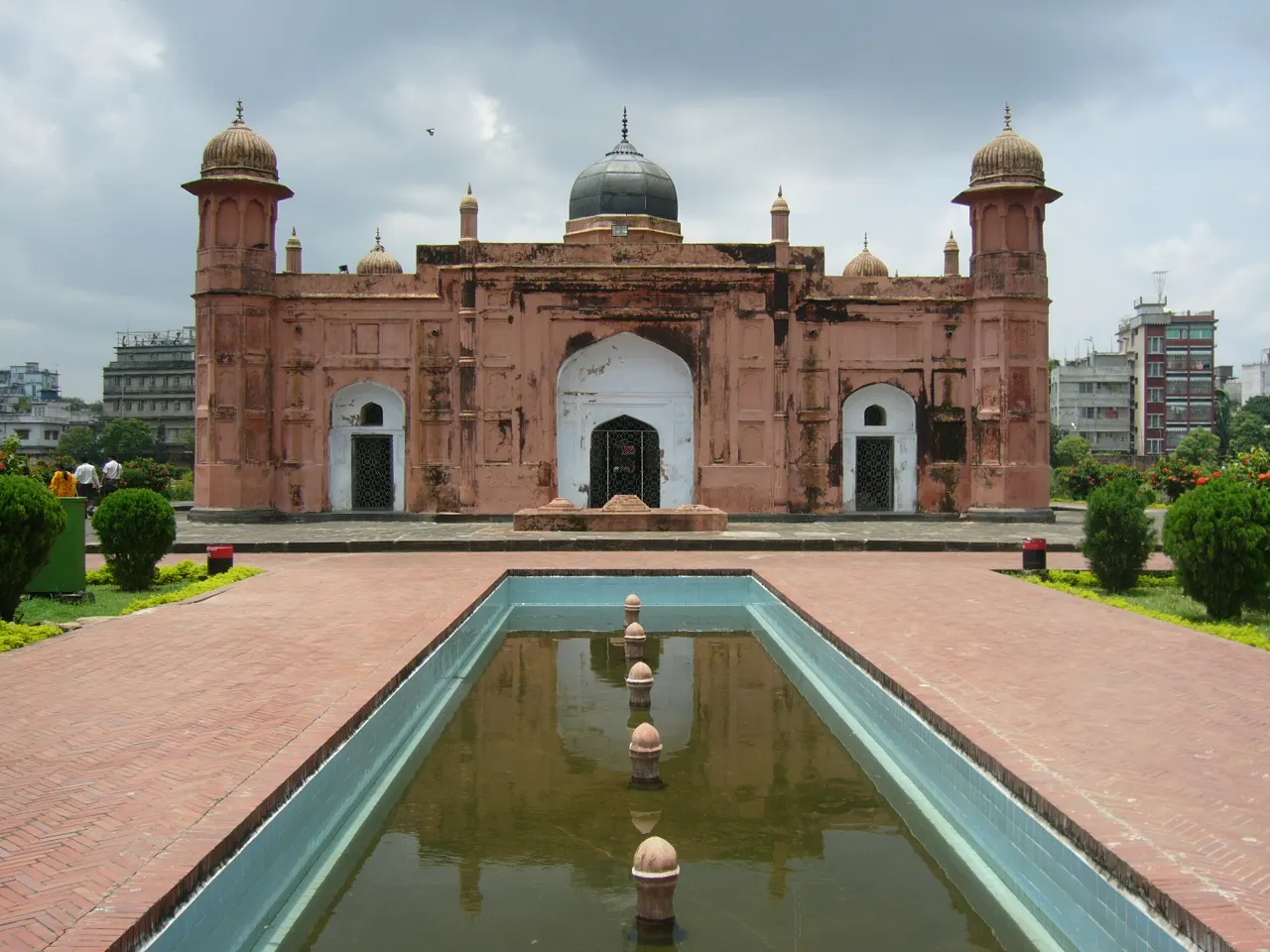
A Mughal fort begun in the 17th century and never finished. Inside are the tomb of Pari Bibi, a mosque and an audience hall set in tidy gardens.
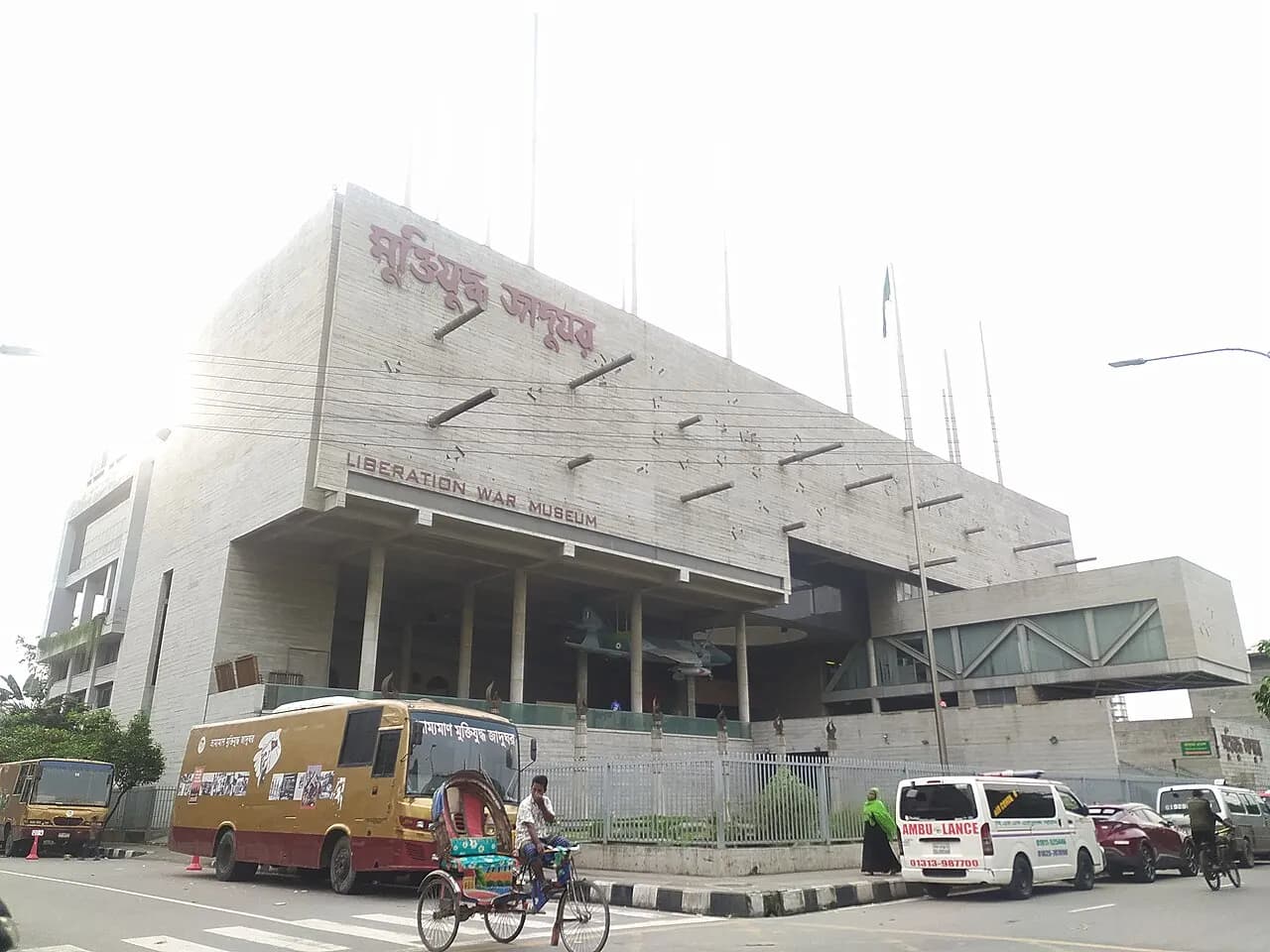
A museum in Agargaon of documents, photographs and personal objects from the 1971 war. Some galleries are harrowing, so prepare children beforehand.
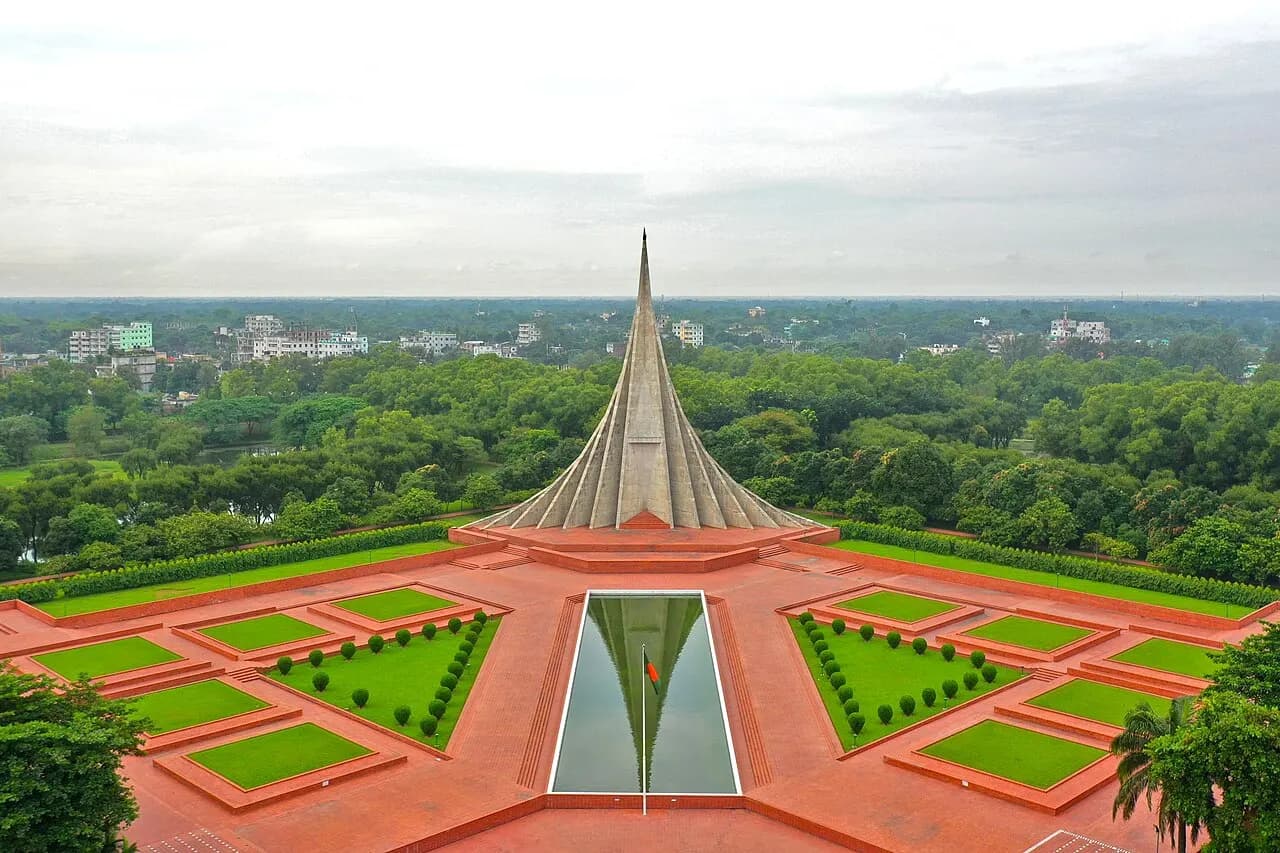
The memorial at Savar to those killed in the 1971 war: seven triangular planes rising over lakes and lawns. It is outside the city, so allow half a day.
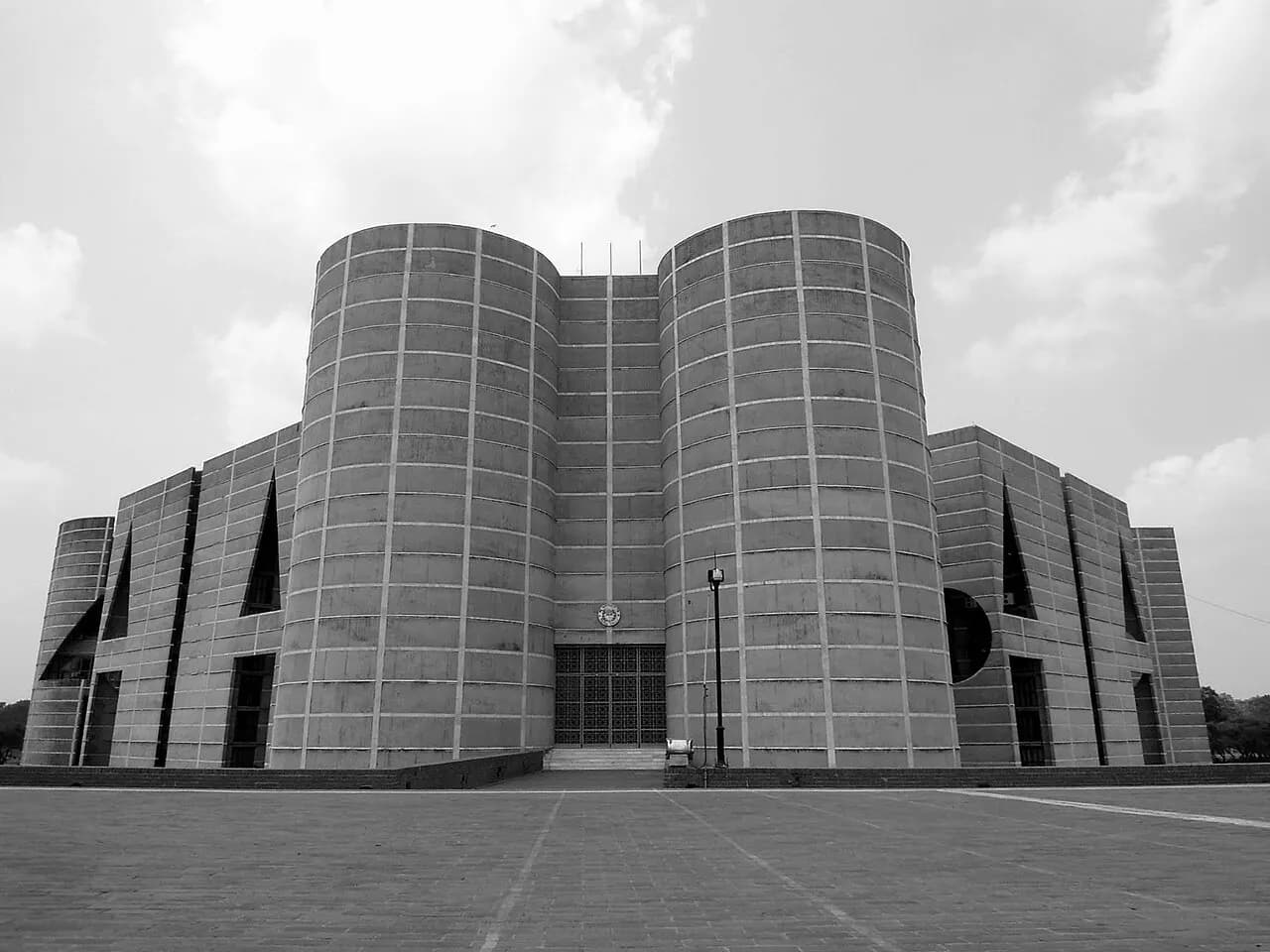
Louis Kahn's great geometric composition of concrete and water. Most visitors see it from outside; the open ground around it is good for a late-afternoon walk.
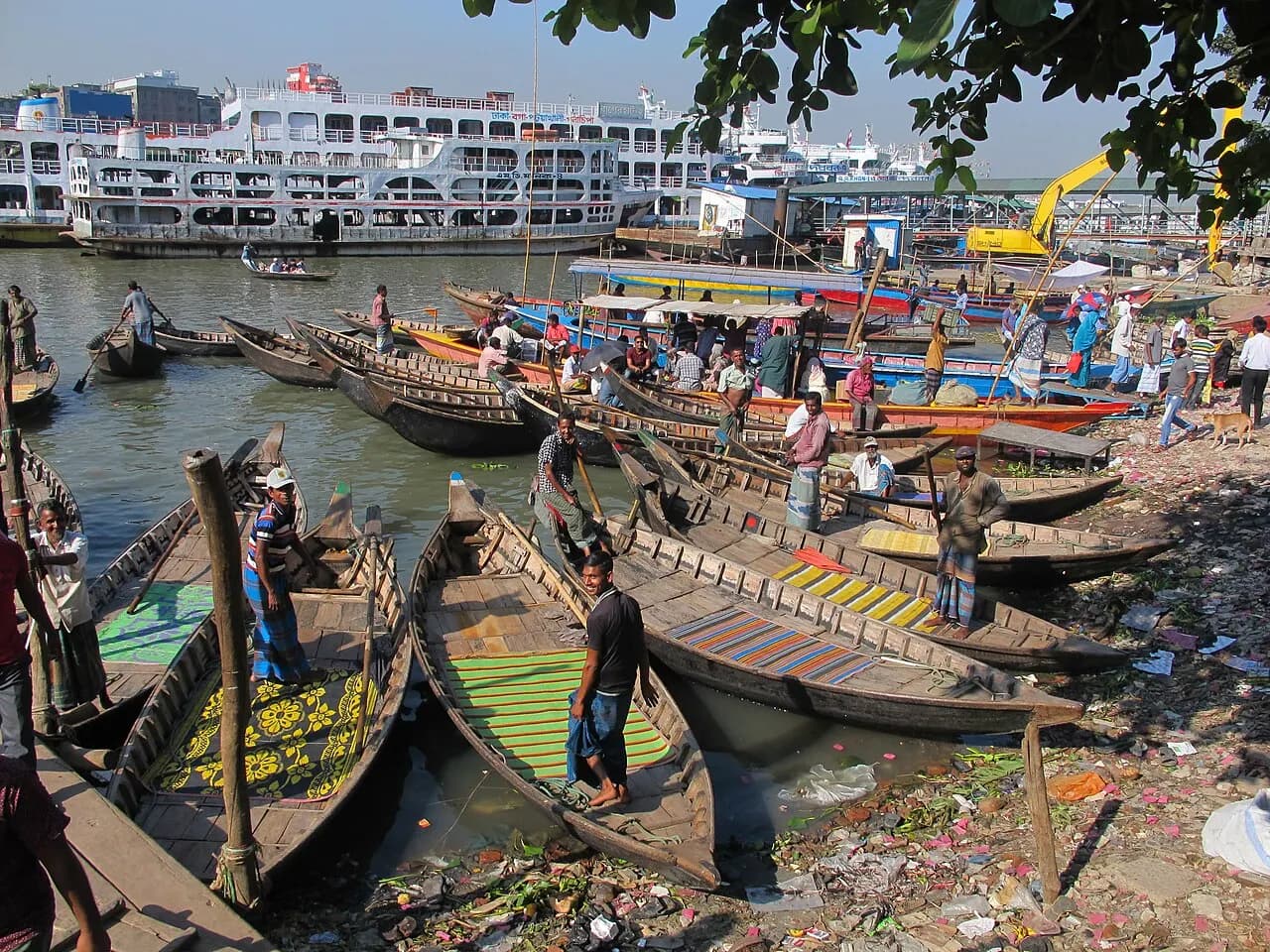
The main river terminal on the Buriganga. Big launches, small wooden ferries and a constant flow of people make it the liveliest picture of Dhaka's river life.
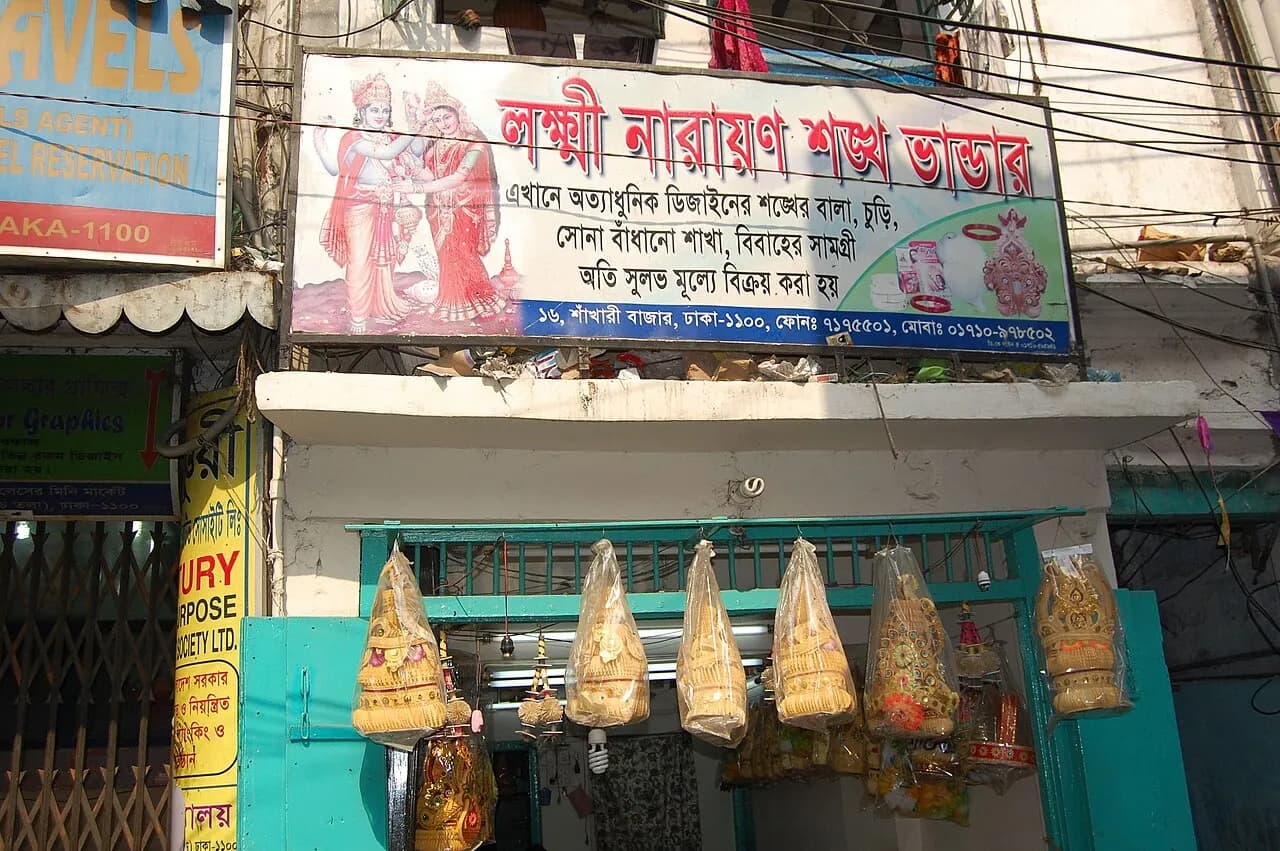
A narrow lane lined with tall, skinny old houses, where artisans carve conch-shell bangles and shops sell puja goods — one of Old Dhaka's most tightly packed neighbourhoods.
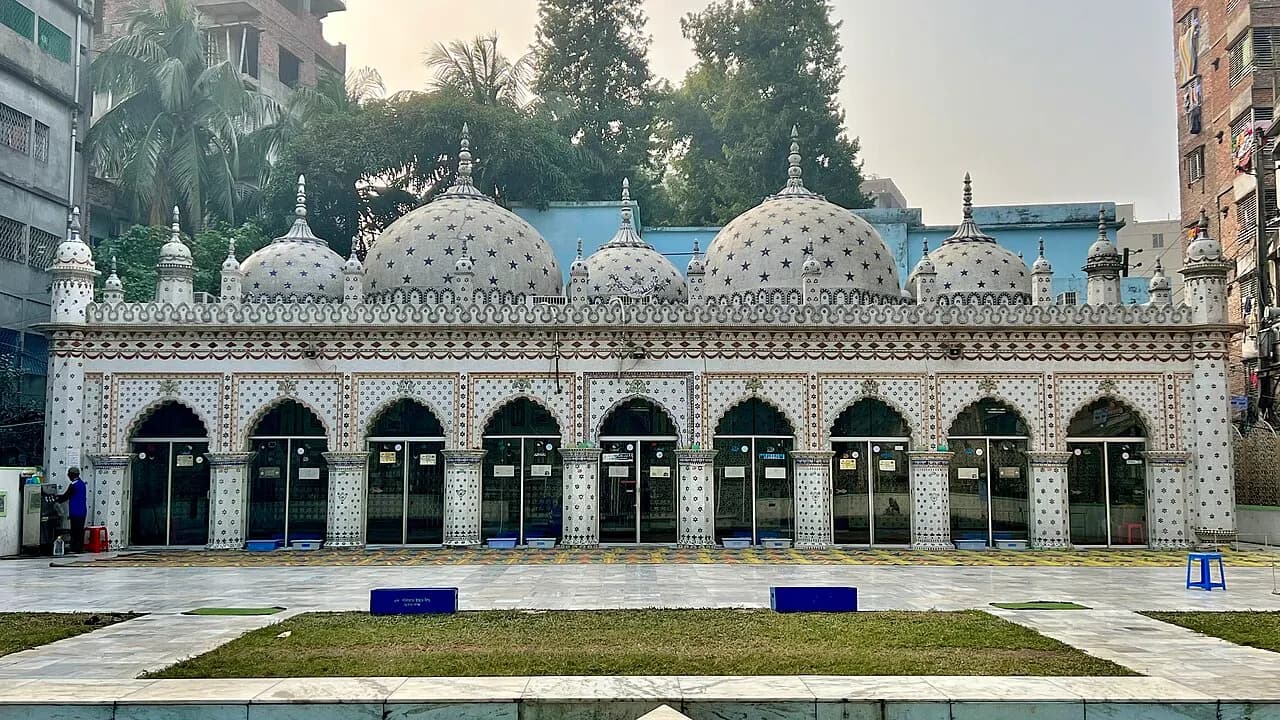
A mosque in Armanitola whose walls are covered in star patterns made from broken china. It is small, but the detail rewards a slow look.
Snack
A crisp, layered flatbread baked in a clay oven — Old Dhaka's classic with morning tea. Around Lalbagh and Chawkbazar you can watch it being made in small shops.
Drink
A tangy, spiced yoghurt and mint drink that almost always comes with biryani and other rich meals in Dhaka.
Dish
Biryani where raw mutton and rice are slow-cooked together under a sealed lid, usually with potato. A long Old Dhaka tradition — go at lunchtime for the freshest pot.
Traffic makes journey times unpredictable, so leave very early if you have a train or flight. Old Dhaka's lanes are narrow and packed: keep bags in front and watch for rickshaws and handcarts. Winter air pollution is severe — carry a mask if you have breathing problems. At night, an app-based car is safer than walking alone through unfamiliar areas.
Details change over time. Check locally before you travel.
Practical tips, not rules. Customs vary by person and place, so watch what people around you do, ask when unsure, and use your own judgement.
Traffic makes journey times unpredictable, so leave very early for a train or flight. Start early for Old Dhaka; Friday mornings are noticeably emptier.
Keep plenty of small notes. Cash is still the norm at village shops, tea stalls and on rickshaws.
Why: Change for large notes is often hard to find.
In towns many places accept bKash or Nagad, but do not rely on it in remote areas. Ask before you order or ride.
Why: Mobile payments stall wherever the network drops.
Withdraw the cash you need before leaving the district town. ATMs thin out in rural areas.
Agree the fare before you get into a CNG, rickshaw, van or boat: the trip out, the return and any waiting time. In bigger cities where ride apps work, they are an option too.
Why: Arguing about the fare afterwards leaves you with no bargaining power.
Buy long-distance bus tickets at the operator's counter and arrive a little before departure. On overnight buses keep a small bag within reach.
Launch, ferry and trawler timings shift with tides, weather and fog. Check at the ghat or with the boatman the day before.
Why: If the last boat has gone, there may be no way back that day.
Buses, trains and launches are packed around Eid. If you can, plan around those days.
Local contacts for this district are not yet verified. In an emergency, call 999.
Numbers can change. Re-check before you travel.
Know a verified contact? Suggest itAround boats and water, life jackets and the weather forecast matter most.
In crowds and traffic, watch your belongings and take care crossing roads.
General guidance; check the weather and local conditions yourself before you go.
This page was written using the sources below.
Spotted a mistake? Tell usIf something looks wrong or out of date, tell us and we'll check and fix it.